Best Puppy Pee Pads (and How to Use Them)
The best puppy pee pads: leak-proof disposable and washable picks, an enzyme cleaner for misses, and how to use pads as a step toward going outside.
Pee pads give you a designated indoor spot for accidents while your puppy's bladder and schedule catch up. They aren't a replacement for taking your puppy outside, but for apartment dwellers, bad-weather days, overnight, and the hours you can't get to the yard in time, a good pad saves your floors and your nerves. The trick is picking one that actually holds the liquid and setting it up where your puppy will use it.
Below are the picks we'd start with: an everyday disposable pad, a washable option for the long haul, the enzyme cleaner you'll want for the inevitable misses, and the pen that keeps the whole potty zone in one place. Each comes with a plain note on why it earns its spot.
In this guide
| Product | Best for | Price range | |
|---|---|---|---|
| Disposable Leak-Proof Pads | Everyday use, easy clean-up | $ | Check price → |
| Washable Reusable Pads | Long-term cost and less waste | $$ | Check price → |
| Enzyme Cleaner | Cleaning up the misses | $ | Check price → |
| Exercise Pen | Keeping the potty zone contained | $$ | Check price → |
Our picks for indoor potty training
Most owners need two things and one backup: a pad that holds up, a way to contain the area, and a cleaner for the times your puppy misses. Here's the setup.
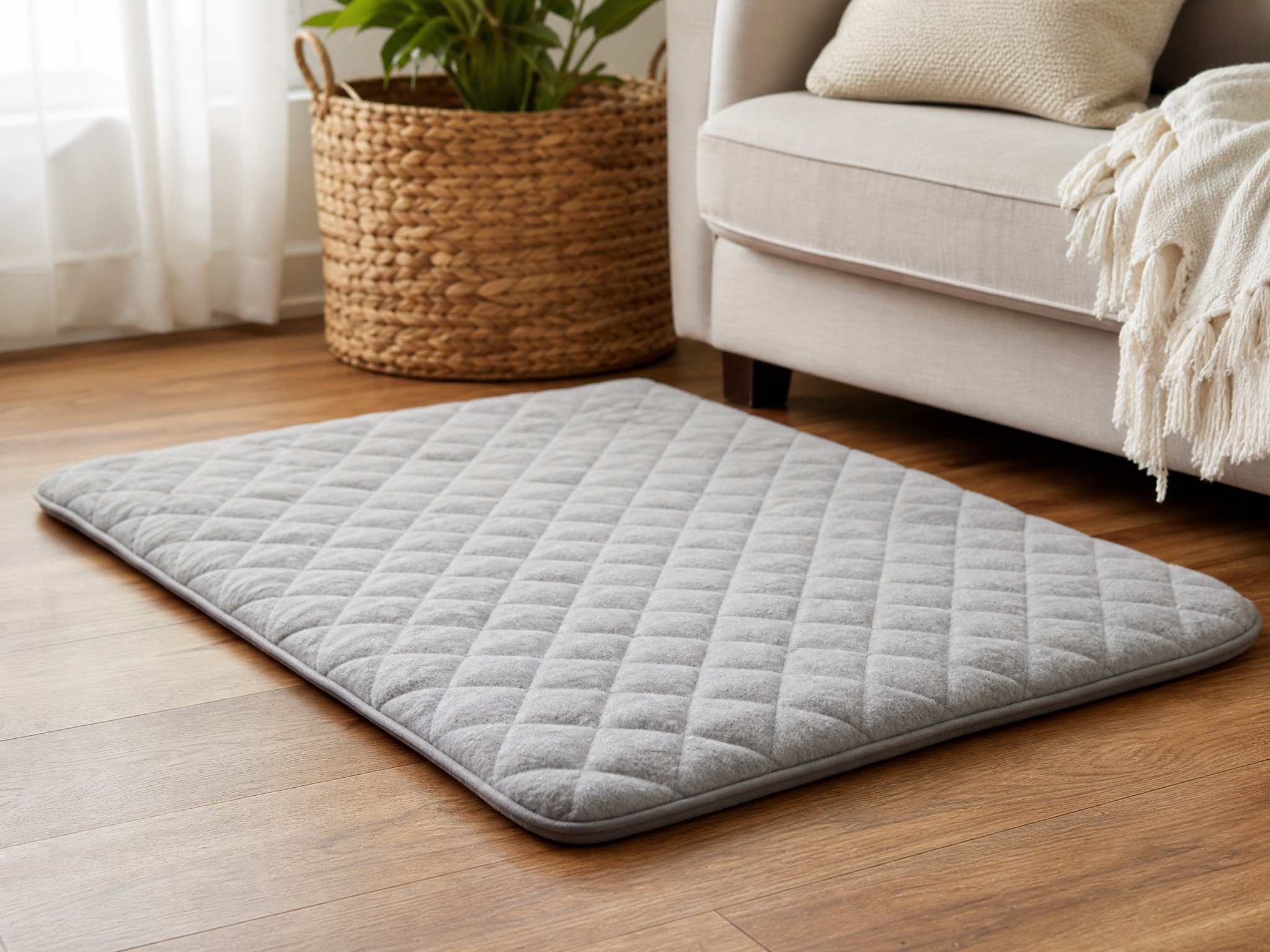
Disposable Leak-Proof Pads
Our pick: Amazon Basics Puppy Training Pads
A five-layer pad with a leak-proof backing absorbs fast and locks the liquid away from your floor, which is the whole job. Quilted pads with raised edges hold more and spread less. Buy a size up from what looks right, because puppies rarely aim for the center, and a bigger target means fewer misses.
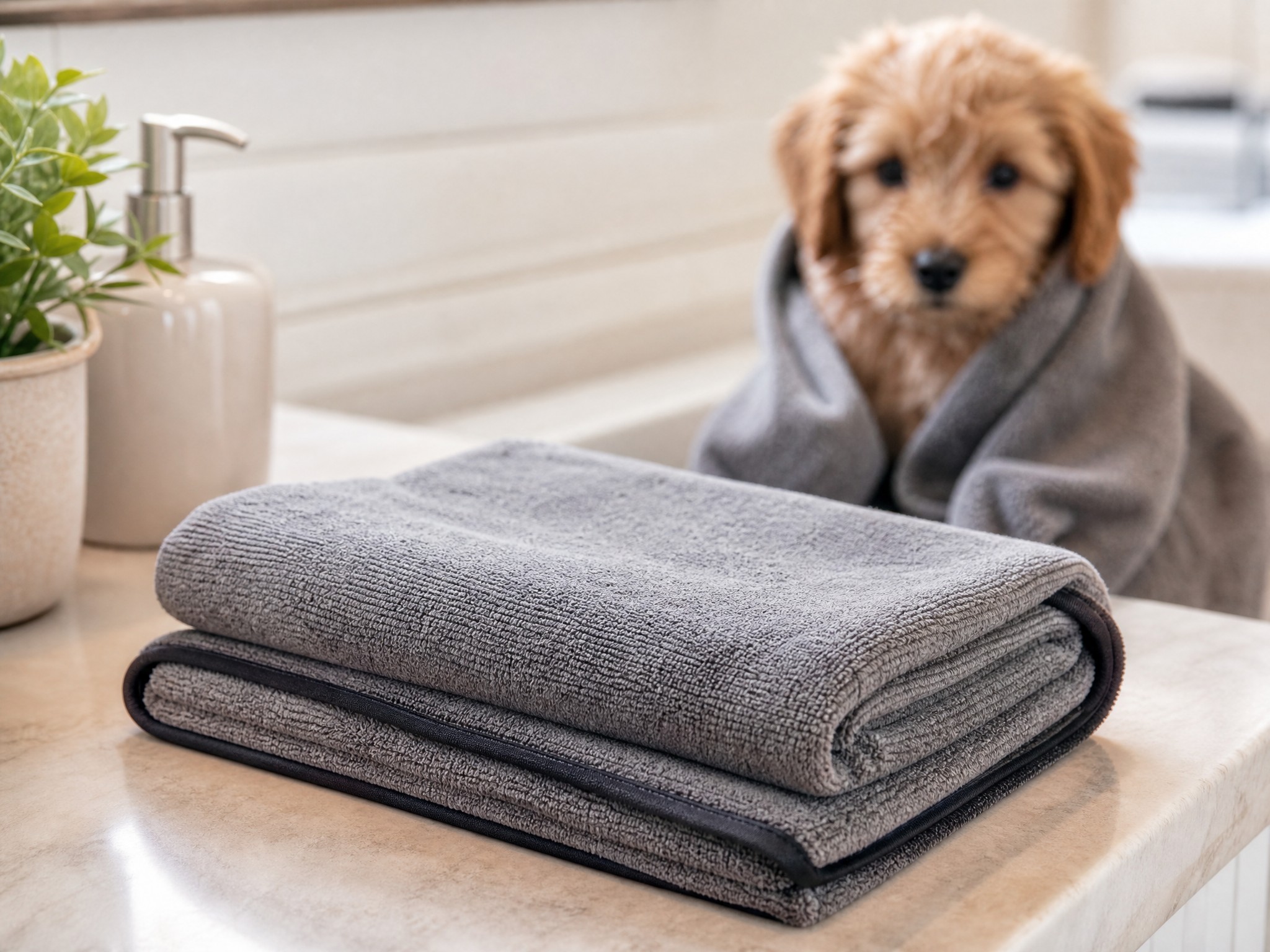
Washable Reusable Pads
Our pick: The Proper Pet Reusable Puppy Pads
A washable pad costs more up front and pays you back over months of use, with less waste in the bin. The fabric backing grips the floor instead of sliding, which suits a puppy who likes to dig at a loose pad. Keep two or three in rotation so one is always ready while the others are in the wash.
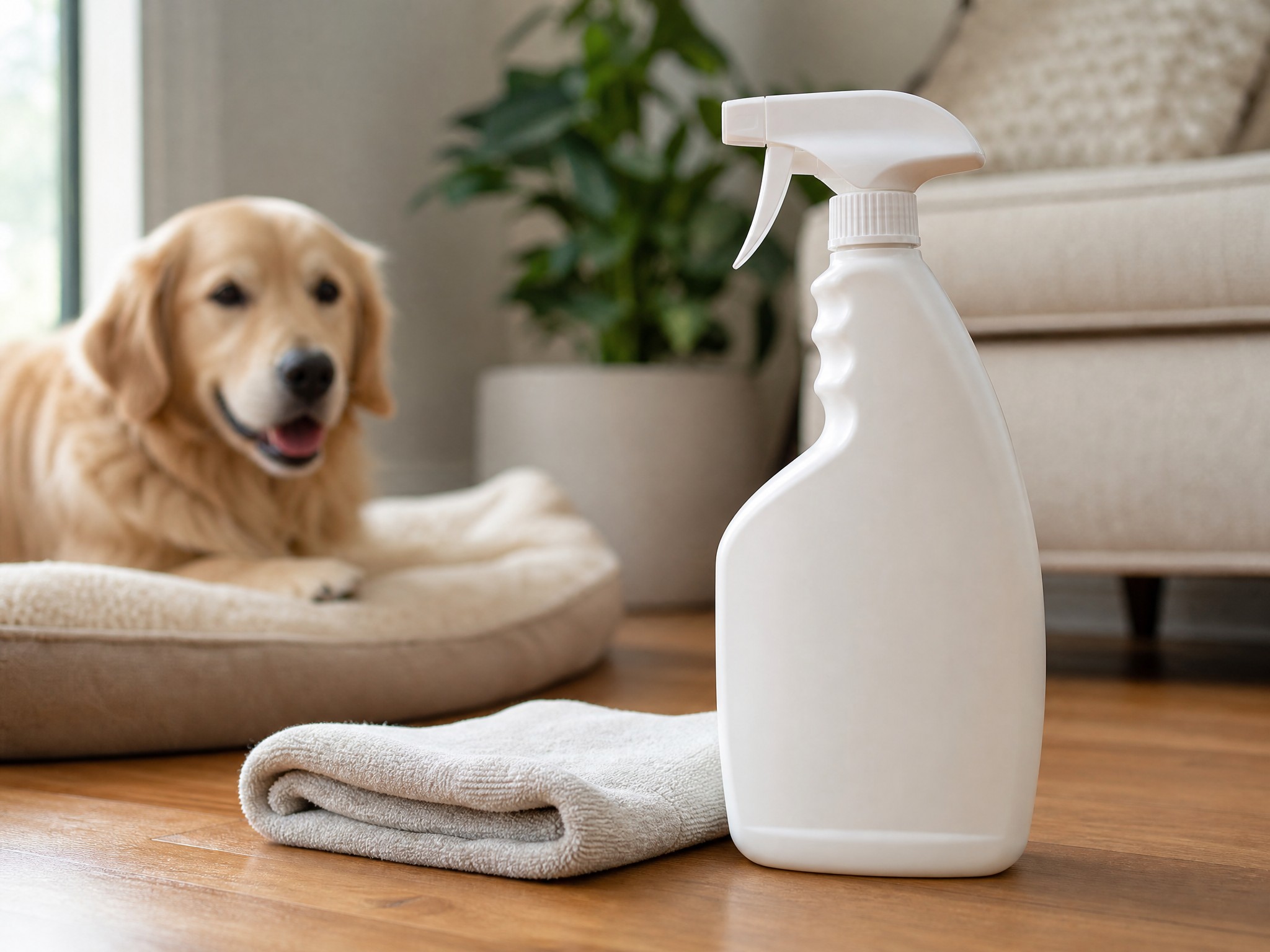
Enzyme Cleaner
Our pick: Rocco & Roxie Stain & Odor Eliminator
When your puppy goes next to the pad instead of on it, a regular cleaner leaves a scent only your puppy can detect, which draws them back to the same spot. An enzymatic cleaner breaks down the odor at the source so the accident doesn't become a habit. Keep a bottle wherever your puppy spends time.
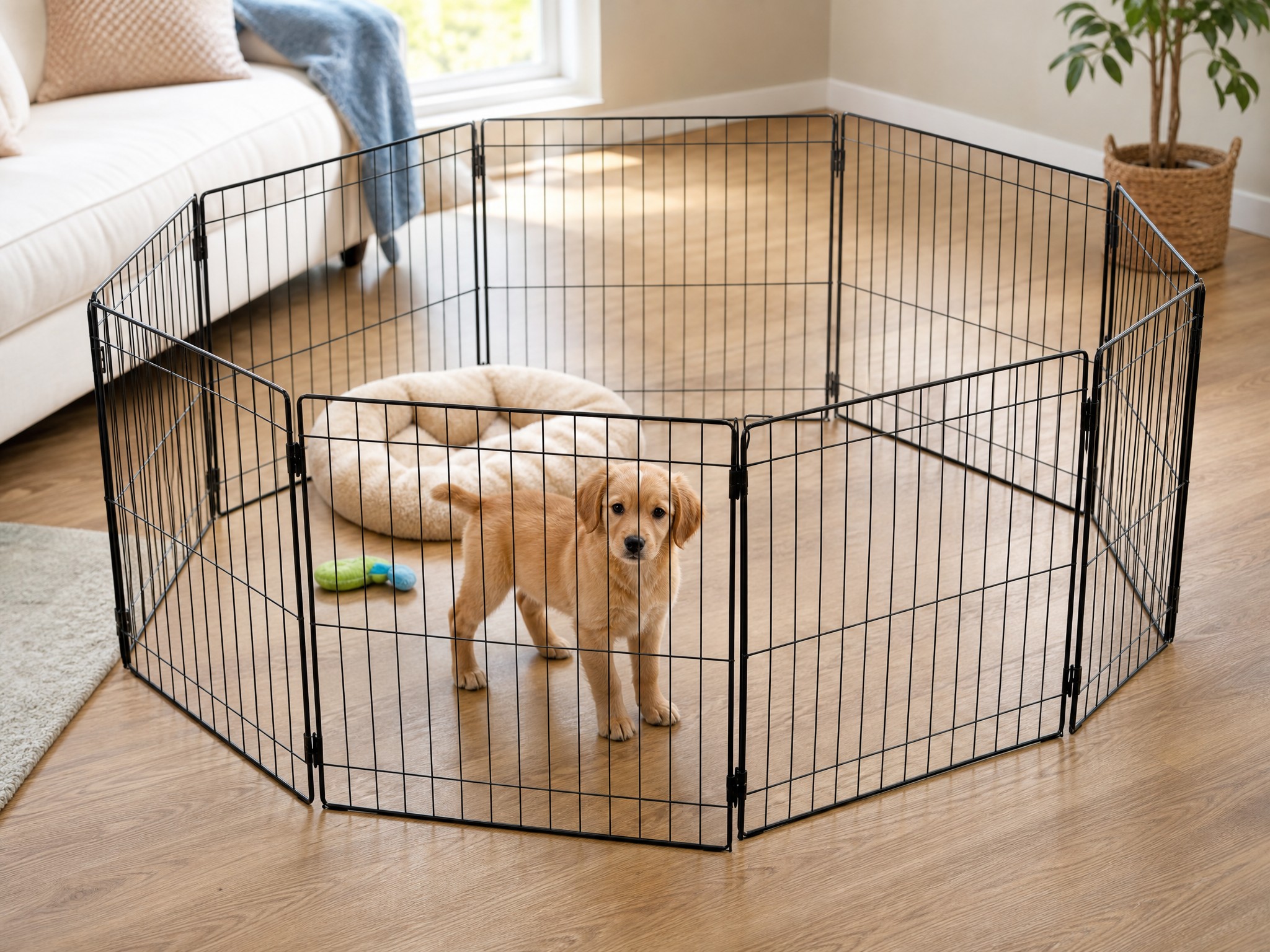
Exercise Pen
Our pick: MidWest Metal Exercise Pen, 30-Inch
Pads work far better inside a defined space. A folding pen keeps the bed at one end and the pad at the other, so your puppy learns to step away from where they sleep to go. It also stops a bored puppy from dragging the pad around the house. Pair it with the crate for a complete setup.
As an Amazon Associate I earn from qualifying purchases. Product buttons are affiliate links — buying through them may earn us a small commission at no extra cost to you, and never changes what we recommend. Full disclosure.
How to use pee pads well
A pad in the wrong place teaches nothing. A few steps make them work:
- Pick one spot and keep it there. Put the pad in the same low-traffic corner every time so your puppy builds a habit. Moving it around resets the lesson.
- Take your puppy to it on a schedule. After waking, after eating, and after play, lead your puppy to the pad and reward the moment they use it, the same way you would outdoors.
- Shrink the gap to outside over time. As your puppy grows, move the pad closer to the door, then just outside, so the habit transfers to the yard. Many owners use pads as a stepping stone, not a permanent fixture.
Pads pair naturally with crate and pen training, since a contained space helps a puppy learn to hold it and to aim for the right spot. For the full routine, our potty-training guide walks through schedule and accident clean-up, and the best playpen roundup covers the pen that holds the whole setup together.
Choosing the right pad
Two things separate a pad that works from one that frustrates you. The first is absorbency: a thin pad soaks through and leaves a puddle, so look for multiple layers and a leak-proof backing rather than the cheapest pack on the shelf. The second is size: a pad that's too small invites misses, and a puppy that overshoots the edge once will often keep doing it. For a determined digger or chewer, a pad holder with a frame clamps the pad down and stops the shredding, which is worth it if your puppy treats a loose pad as a toy. Whichever you choose, change a soiled pad promptly, since a clean target is one your puppy is far more likely to use again. To stock the rest of the potty-training kit, see the training tools in the store and the starter kit.
Shop the full category
Training pads, an enzyme cleaner, a pen, and the rest of the potty kit in one place.
Questions owners ask
Get the free New-Puppy Checklist
Put the whole first month on one page — supplies, setup, and the routine that keeps training on track.
Get the Free Checklist