Crate Training a Puppy the Kind Way
Make the crate a place your puppy chooses to rest: right size, slow positive introduction, meals inside, building duration, and calm nighttime crating.
A crate, used kindly, is one of the most useful tools a new owner has. It gives your puppy a safe den to rest in, speeds up potty training, keeps them out of trouble when you can't watch, and makes travel and vet visits less stressful. The key word is kindly: a crate should be a place your puppy chooses to relax, never a punishment.
In this guide
Get the size right
The crate should be just big enough for your puppy to stand up, turn around, and lie down comfortably — no bigger, especially during potty training. Too much space lets a puppy use one end as a bathroom. Buy a crate sized for your dog's adult weight and use the divider panel to shrink the usable space while they grow. Add a soft, washable mat to make it inviting.
Introduce it slowly
Don't shut your puppy in on day one and walk away. Prop the door open and let them explore. Toss treats inside so they wander in on their own. Feed a few meals near it, then just inside. The message you're building is simple: good things happen in the crate, and going in is the puppy's idea.
Feed meals inside
Once your puppy will step in for treats, start feeding full meals in the crate with the door open. After a few easy meals, close the door while they eat and open it the moment they finish. This is the bridge from “I'll pop in for a snack” to “I'm comfortable in here with the door shut.”
Build up time gradually
Start with short closed-door sessions while you're in the room — a minute, then a few, then ten — giving a stuffed chew toy to keep them happily occupied. Slowly add duration and step out of sight in stages. Always let them out when they're calm, not mid-cry, so you're rewarding settling rather than fussing. A good chew or a frozen stuffed toy turns crate time into something a puppy looks forward to.
Crating at night
For the first few weeks, place the crate in or near your bedroom. Being close reassures a new puppy and lets you hear when they genuinely need a potty break. Keep nighttime trips calm and boring. Most puppies settle into sleeping through the night within a few weeks as their bladder capacity grows and the routine sinks in. Pair this with the routine in our potty-training guide for the smoothest nights.
Common crate mistakes to avoid
Most crate problems trace back to a handful of avoidable missteps. Rushing is the big one: shutting a brand-new puppy in for hours on day one teaches them the crate is a trap, not a den. Build up slowly and keep early sessions short and positive. Letting a puppy out the instant they cry is another, because it rewards the fussing and trains a louder protest next time — wait for a pause, however brief, then open the door.
A few more to watch for:
- Too much space. A crate sized for an adult dog lets a puppy potty in one corner and sleep in the other. Use the divider.
- Collars left on. Tags and collars can snag on crate wire. Take them off for crate time.
- The crate as a time-out. If it becomes where the puppy gets sent when you’re frustrated, they’ll learn to dread it.
- Boredom. A safe chew or a stuffed, frozen toy turns crate time into something pleasant rather than lonely.
Get those right and the crate becomes what it should be: the spot your puppy wanders into on their own for a nap.
Gear we mention in this guide
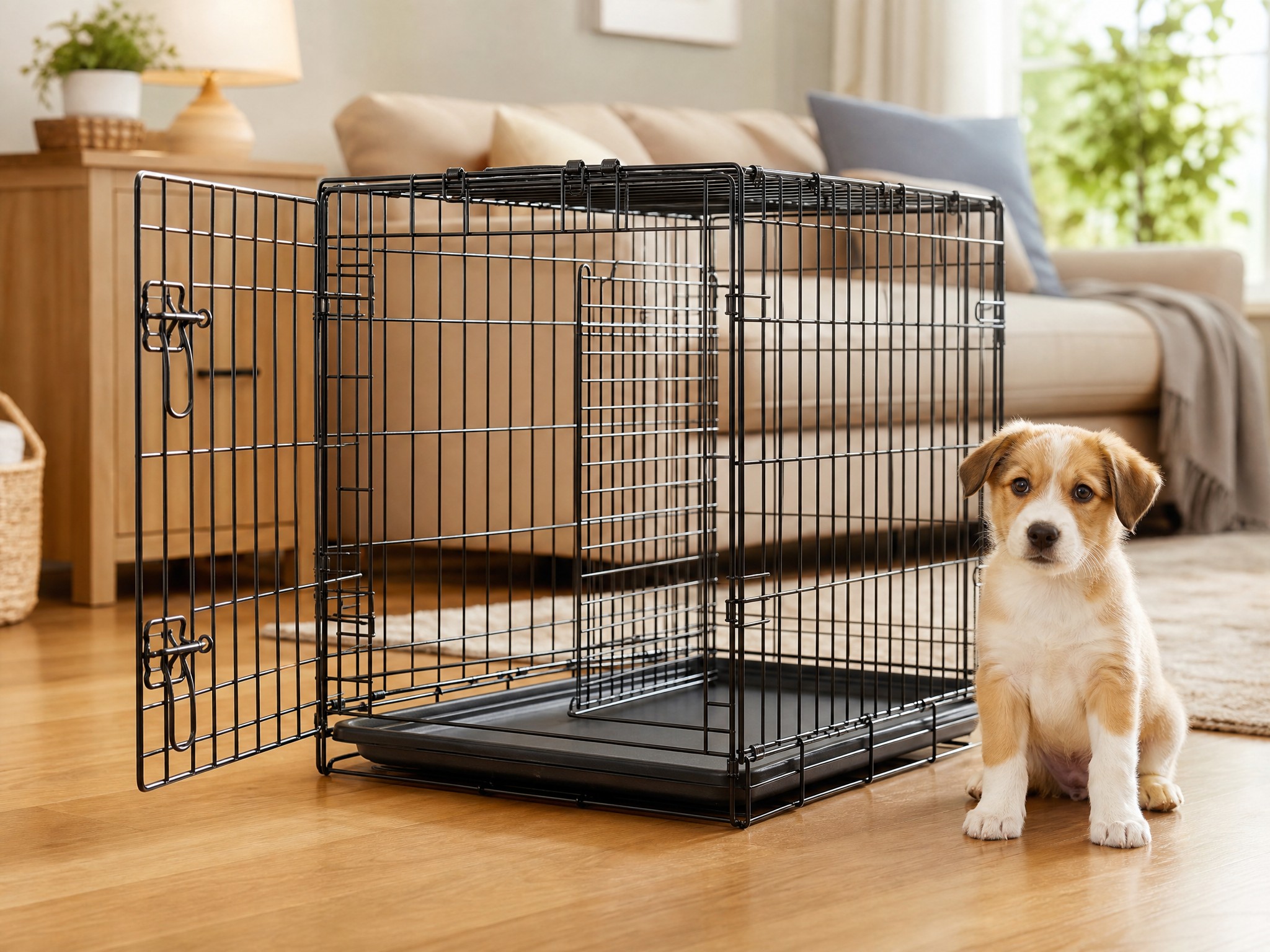
Wire Crate with Divider
Our pick: MidWest iCrate Folding Crate with Divider
Sized for the adult dog with a divider to keep it snug now. Folds flat, wipes clean, and the open sides help a nervous puppy settle.
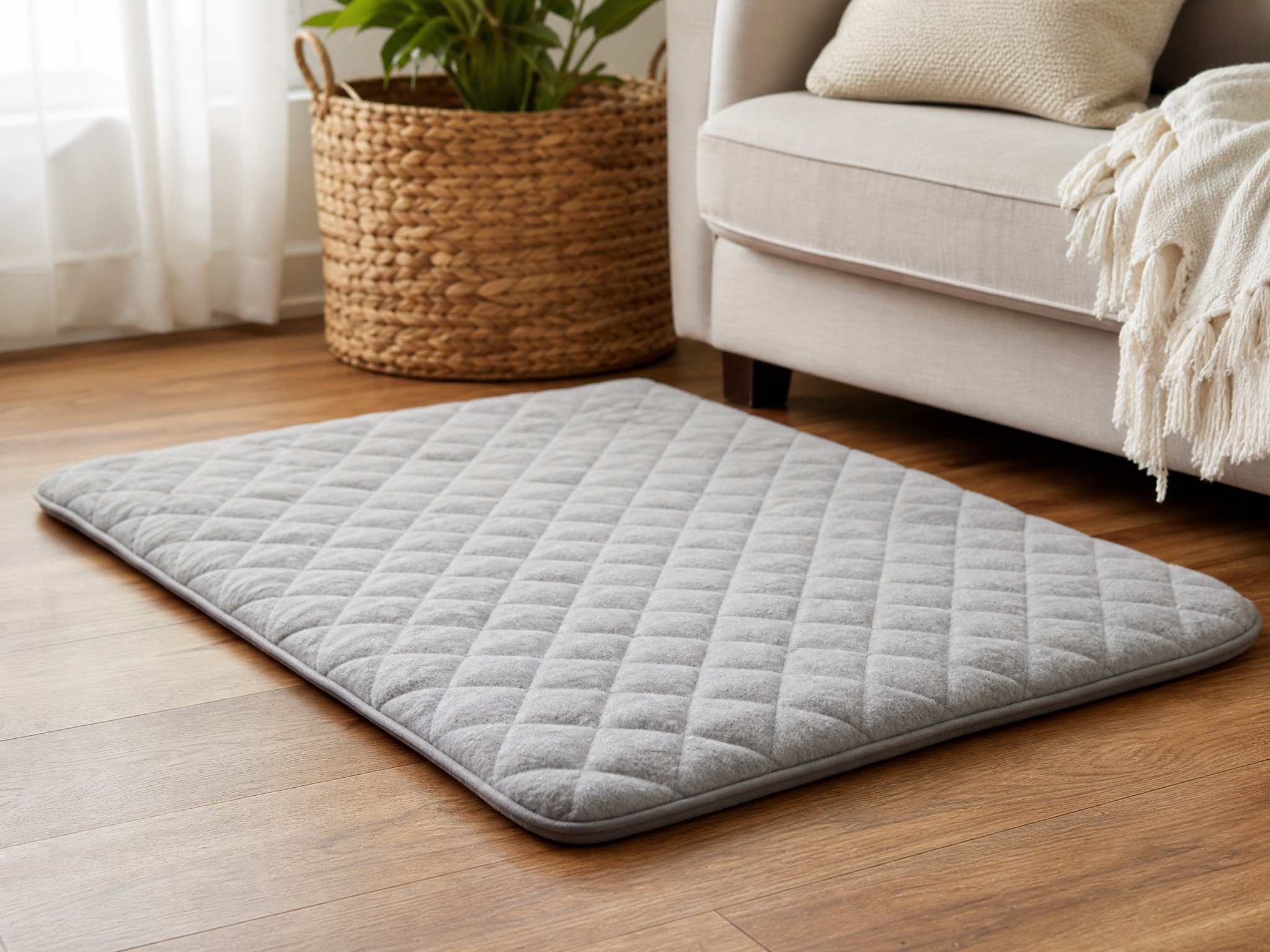
Crate Mat or Pad
Our pick: Slumber Pet Megaruffs Chew Resistant Crate Mat
A flat, washable, chew-resistant pad makes the crate inviting without handing a teething puppy something to shred.
As an Amazon Associate I earn from qualifying purchases. Product buttons are affiliate links — buying through them may earn us a small commission at no extra cost to you, and never changes what we recommend. Full disclosure.
Crate-training gear
A divider crate, a washable mat, and a stuffable chew toy are all you really need.

Questions owners ask
Get the free New-Puppy Checklist
Put the whole first month on one page — supplies, setup, and the routine that keeps training on track.
Get the Free Checklist