Puppy Feeding Guide: How Much & How Often by Age
A puppy feeding guide grounded in trusted veterinary sources: choosing a food, how often and how much to feed by age and size, switching foods safely, and which foods to avoid.
What and how much you feed shapes your puppy's growth, energy, and habits for years. The basics aren't complicated, but they do change quickly as your puppy grows. This guide covers the general principles — how often to feed, roughly how much, and how to make changes safely. For the exact amount and the right diet for your individual puppy, your veterinarian and the feeding chart on your food bag are the sources to trust.
In this guide
Choose a food made for puppies
Puppies need more calories, protein, and specific nutrients than adult dogs to fuel rapid growth. Look for a complete-and-balanced puppy food that meets AAFCO nutritional guidelines for growth, stated on the label. Large and giant breeds have their own large-breed puppy formulas designed to slow bone growth and protect developing joints, which matters a lot for big dogs. If you're unsure which to pick, ask your vet for a recommendation suited to your puppy's breed and size.
How often to feed
Young puppies have small stomachs and big energy needs, so they eat more frequently than adults. A general pattern many owners and vets follow:
- 6–12 weeks: about 4 meals a day
- 3–6 months: about 3 meals a day
- 6–12 months: about 2 meals a day
- After 12 months (later for large breeds): typically 2 meals a day
Regular meals at set times also support potty training, because what goes in on a schedule comes out on a schedule.
How much to feed
Start with the feeding chart printed on your food's packaging, matched to your puppy's current weight and age, then adjust based on body condition. The chart is a starting point, not a law — active puppies may need a little more, mellow ones a little less. The amount comes from your bag; the rhythm below is a general schedule most owners can follow:
| Age | Meals per day | Sample times | What to watch |
|---|---|---|---|
| 6–12 weeks | 4 | 7am · 11am · 3pm · 7pm | Tiny stomach, big needs — don't skip the midday meals. |
| 3–4 months | 3 | 7am · 12pm · 5pm | Growing fast; adjust the amount by body condition. |
| 4–6 months | 3 | 7am · 12pm · 5pm | Teething can dent appetite for a few days — normal. |
| 6–12 months | 2 | 7am · 6pm | Drop to twice daily once growth slows. |
| 12+ months (large breeds later) | 2 | 7am · 6pm | Transition to adult food over about a week. |
Switching foods safely
A sudden diet change is a fast track to an upset stomach. When you change foods — including the move from your breeder's or shelter's food to your own choice — do it gradually over about a week:
- Days 1–2: 75% old food, 25% new
- Days 3–4: 50/50
- Days 5–6: 25% old, 75% new
- Day 7: 100% new food
If you see loose stool or vomiting, slow the transition down and, if it doesn't settle, check with your vet.
Scheduled meals beat the all-day buffet
Leaving a full bowl out all day (free-feeding) makes it hard to know how much your puppy actually eats, throws off potty timing, and can lead to picky habits or quiet weight gain. Set meals at the same times each day, put the bowl down for about 15 minutes, then pick up whatever is left. Most puppies quickly learn to eat when food is offered. Scheduled meals also give you an early warning system: a puppy who suddenly skips a meal is telling you something, and that signal is easy to miss with a bowl that’s always full.
Treats and water
Treats are essential for training, but keep them to roughly 10% of daily calories so they don't unbalance the diet or pad the waistline. Use tiny pieces — puppies care about frequency, not size. Fresh, clean water should be available at all times, with a bit more attention to refills around meals and play.
Foods to keep away from puppies
Several common human foods are toxic to dogs. Keep these out of reach entirely:
- Chocolate, coffee, and anything with caffeine
- Grapes and raisins
- Onions, garlic, leeks, and chives
- Xylitol (a sweetener in gum, some peanut butters, and baked goods)
- Macadamia nuts, alcohol, and raw bread dough
Gear we mention in this guide
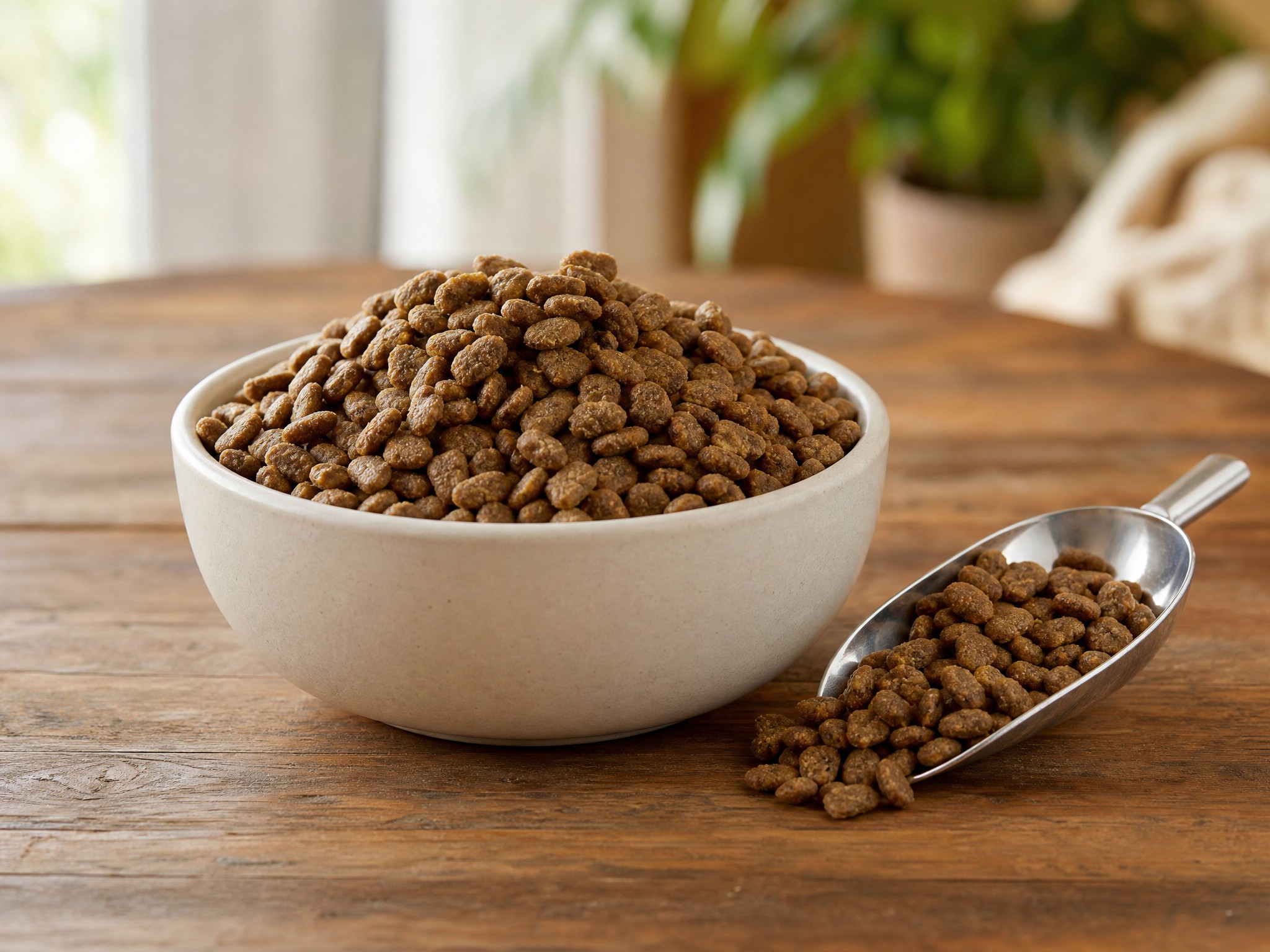
Complete Puppy Food
Our pick: Purina Pro Plan Puppy Chicken & Rice
A complete-and-balanced food labeled for growth, sized to your dog's breed. Match large-breed puppies to a large-breed formula for safe joint development.
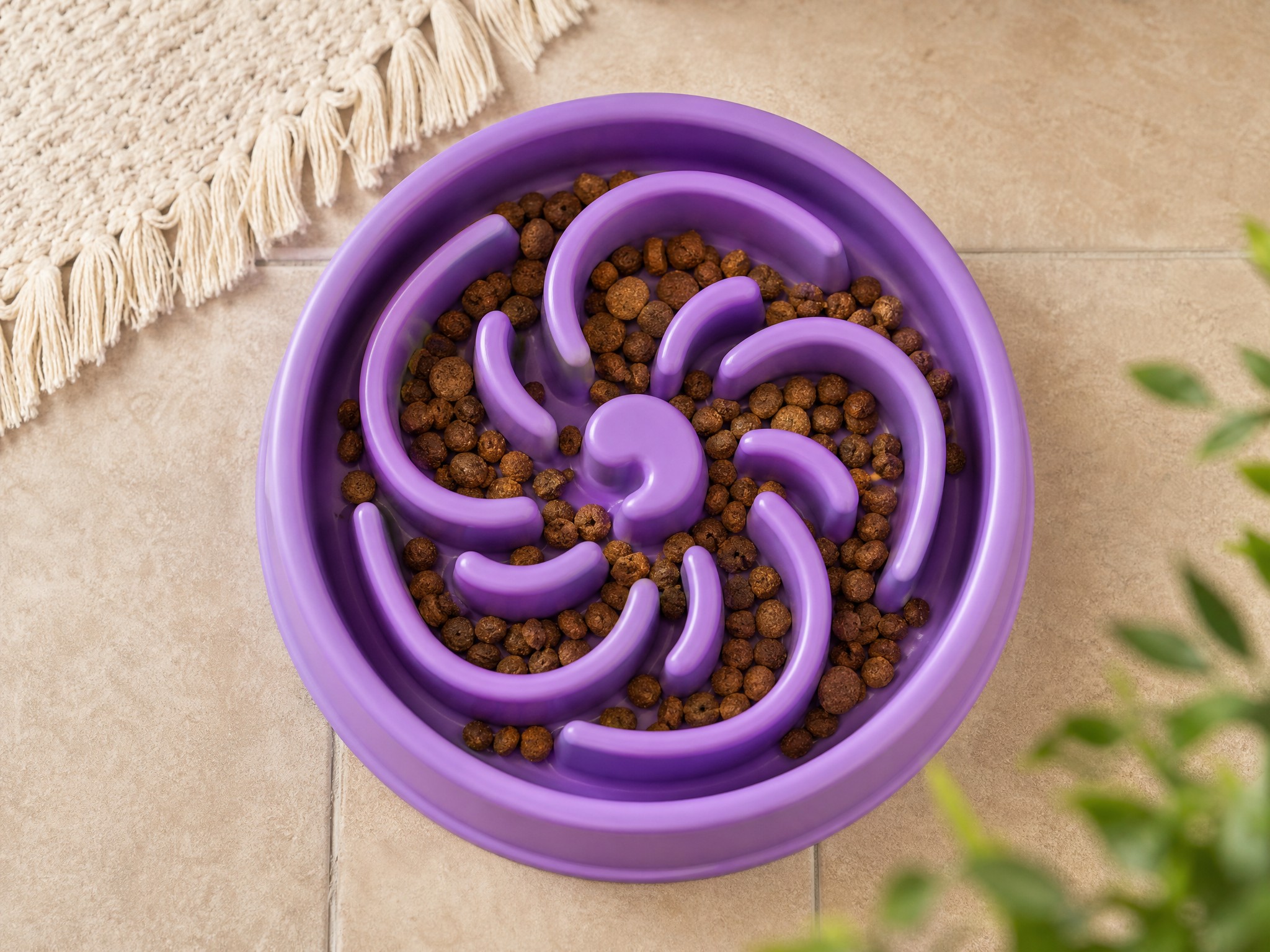
Slow-Feeder Bowl
A maze-pattern bowl slows down a gulper, which aids digestion and adds a little mealtime enrichment.
As an Amazon Associate I earn from qualifying purchases. Product buttons are affiliate links — buying through them may earn us a small commission at no extra cost to you, and never changes what we recommend. Full disclosure.
Feeding-time gear
A pair of sturdy bowls, an airtight food container, and training-size treats cover the essentials.
Questions owners ask
Get the free New-Puppy Checklist
Put the whole first month on one page — supplies, setup, and the routine that keeps training on track.
Get the Free Checklist