How to Choose a Puppy Crate: Size, Type, and Features
How to choose a puppy crate: size it for the adult dog and use a divider, pick the type for your home, and choose the features that actually matter.
A crate is one of the first things you'll buy, and it's easy to get wrong: too small and your puppy outgrows it in weeks, too big and it stops helping with potty training. This short buying guide walks through the three decisions that matter, so you choose once and choose right.
It pairs with our best crates roundup if you want specific picks once you know what you're after.
| Adult weight | Crate size | Example breeds |
|---|---|---|
| Up to 25 lb | 24 to 30 inch | Toy and small breeds |
| 25 to 60 lb | 36 inch | Spaniels, medium mixes |
| 60 to 90 lb | 42 inch | Labs, shepherds |
| 90 lb and up | 48 inch | Giant breeds |
1. Size it for the adult dog, then divide
Buy the crate for your puppy's expected adult weight, then use a divider panel to keep the usable space small for now. This is the move that saves you from buying two crates. The right amount of room is just enough to stand up, turn around, and lie down. More than that and a puppy can potty in one corner and sleep in another, which defeats the purpose. Ask your breeder or shelter for the expected adult weight if you're not sure.
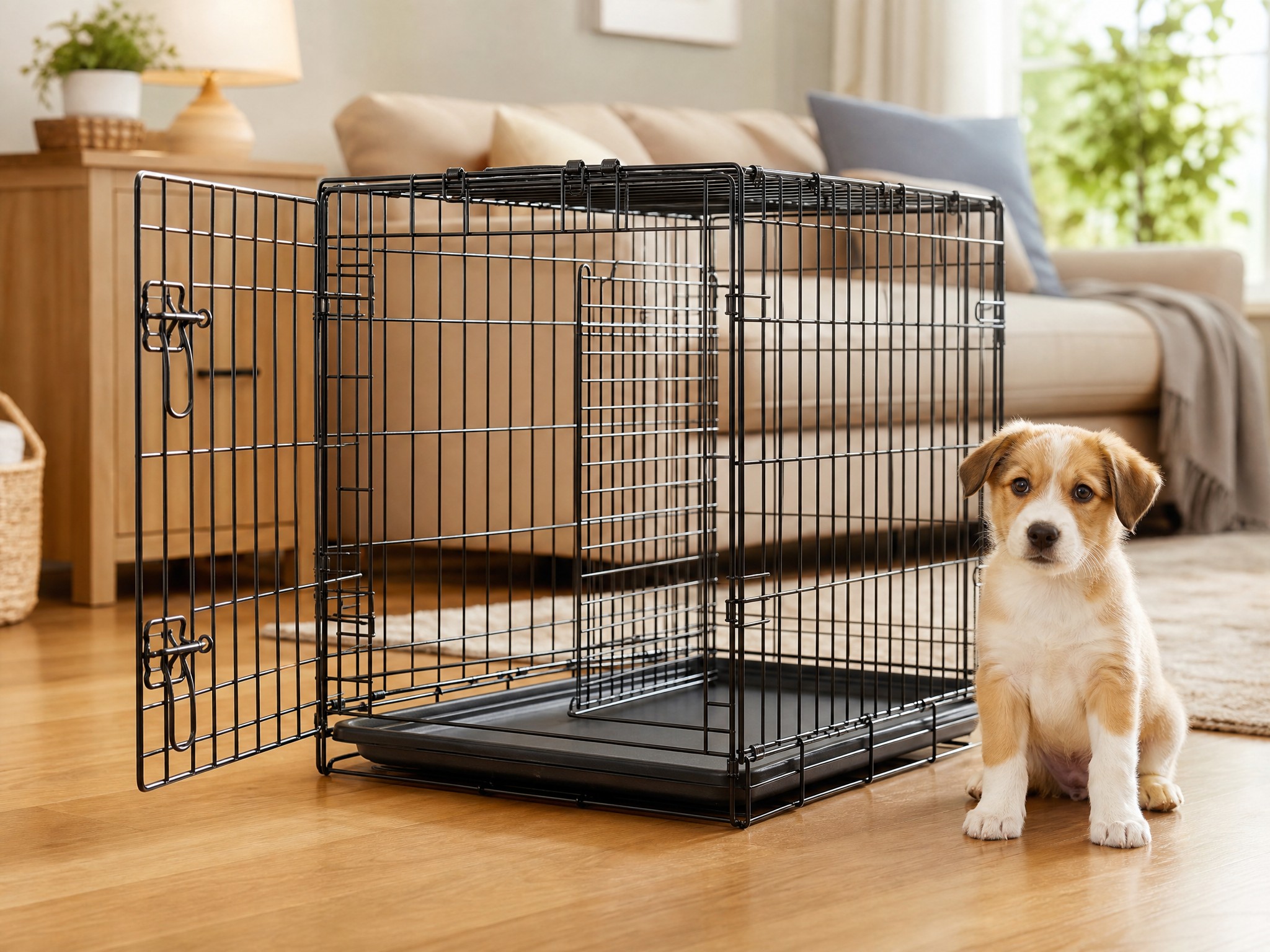
Wire Crate with Divider
Our pick: MidWest iCrate Folding Crate with Divider
The divider lets one crate shrink to fit your puppy now and open to full size later. It's the single most practical feature for a growing dog, and it makes the crate work for potty training from day one.
As an Amazon Associate I earn from qualifying purchases. Product buttons are affiliate links — buying through them may earn us a small commission at no extra cost to you, and never changes what we recommend. Full disclosure.
2. Pick the type for your home
- Wire crate: the all-rounder. Folds flat, wipes clean, offers airflow and visibility, and takes a divider. Best first crate for most homes.
- Plastic crate: more enclosed and den-like, and often airline-friendly. A good pick for travel or a puppy that prefers a darker, cozier space.
- Soft-sided crate: light and packable for trips, but no match for a determined chewer. Save it for an older, settled puppy.
Many owners start with a wire crate at home and add a plastic or soft crate later for the car. If you're weighing a crate against a pen, the crate vs. playpen guide explains when you need each.
3. Features worth paying for (and skipping)
You don't need much, but a few features earn their keep:
- A divider panel (non-negotiable for a growing puppy).
- A removable, washable tray for easy accident clean-up.
- Two doors for flexible placement in a room.
- Secure latches a clever puppy can't nose open.
Skip the pricey "designer furniture" crates until your puppy is past the chewing stage. Add a flat, chew-resistant mat rather than thick bedding at first, and make the crate inviting with the steps in our crate-training guide.
Where to put it, and how many you need
One crate is usually enough, but two can make life easier: a main crate where your puppy sleeps and a lightweight travel crate for the car. If you go that route, start with the wire crate at home and add a soft or plastic crate later, rather than buying both up front. Most owners find a single well-placed crate handles the first several months without any extra.
For placement, pick a spot that's quiet enough for real rest but still part of the household, so the crate doesn't feel like exile. Keep it in or beside your bedroom for the first week or two so a young puppy settles at night and you can hear the overnight potty cues. As your puppy matures and sleeps more soundly, you can move the crate to wherever suits your home best.
Questions owners ask
Get the free New-Puppy Checklist
Put the whole first month on one page — supplies, setup, and the routine that keeps training on track.
Get the Free Checklist