Nail Clippers vs. Grinder for Puppies: Which Is Easier?
Dog nail clippers vs. grinder for puppies compared on speed, noise, smoothness, and the quick. When to use each, and how to keep trims low-stress.
Trimming a puppy's nails is one of those small jobs that fills new owners with dread, and the tool you pick has a lot to do with how it goes. The two choices are a clipper, which cuts the nail in one quick snip, and a grinder, which sands it down with a rotating head. Neither is the right answer for every dog. The best tool is the one you'll actually use often enough to keep your puppy's nails short.
Here's how the two compare, when to reach for each, and the one safety item you want on hand either way.
| Nail clippers | Nail grinder | |
|---|---|---|
| Speed | One quick snip per nail | Slower, sands gradually |
| Noise & vibration | Quiet, no vibration | Buzzes and vibrates |
| Finish | Can leave a sharp edge | Smooth, rounded tip |
| Quick risk | Easier to cut too far at once | Easier to stop before the quick |
| Best for | Thin nails, calm puppies | Thick nails, smoothing edges |
| Get it | Check price → | Check price → |
When clippers win
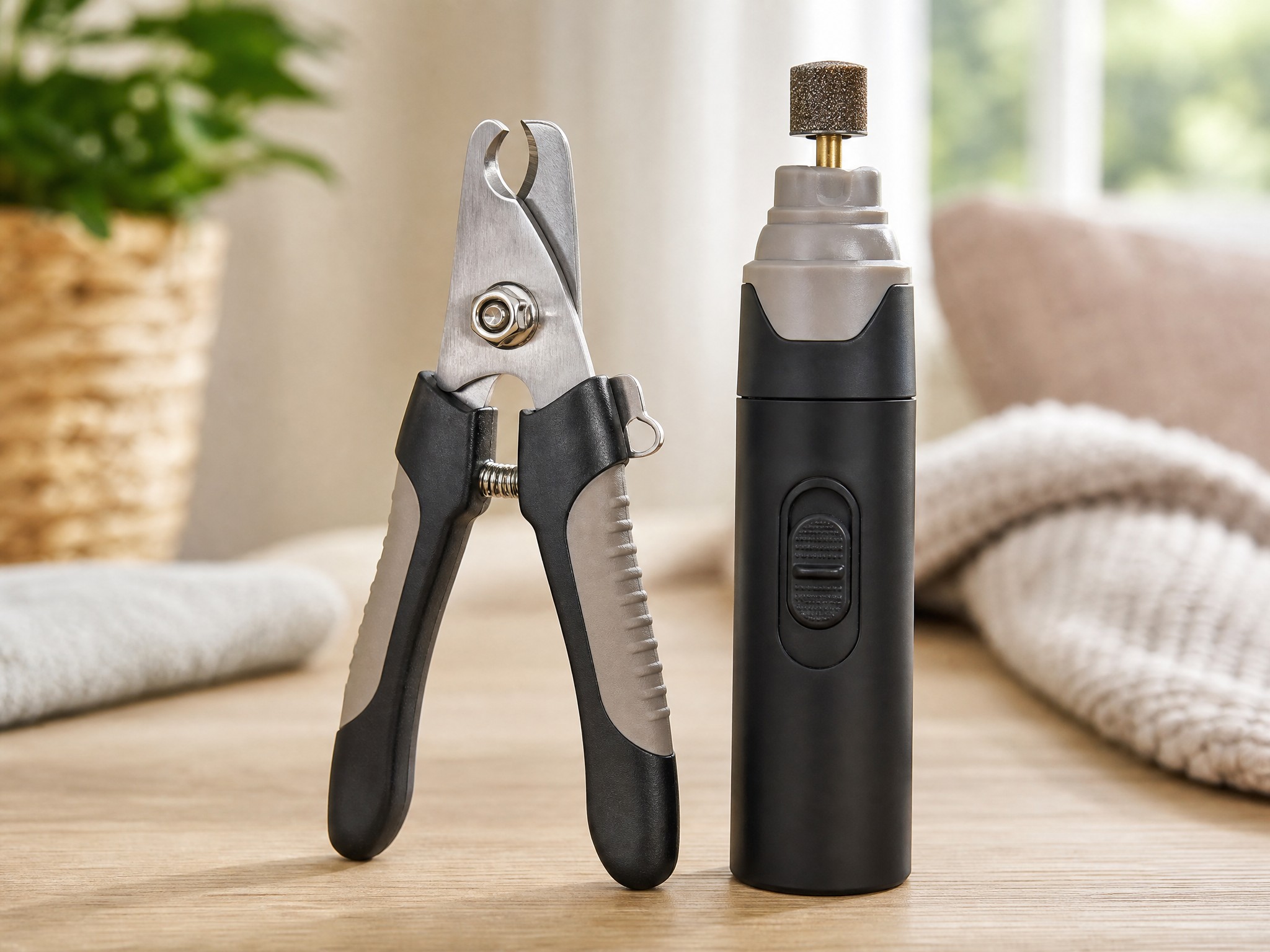
A good scissor-style or plier-style clipper takes a nail off in one fast, quiet motion, which is its biggest advantage. There's no noise, no vibration, and no waiting, so a puppy who's nervous about the whole business is often less bothered by a quick snip than by a buzzing tool held against their paw. Clippers are also cheaper, need no charging, and work well on thin puppy nails. The downside is control: it's easier to take off too much in one cut and hit the quick, the pink blood vessel inside the nail, so you trim a little at a time.
Nail Clippers
Our pick: Boshel Dog Nail Clippers
A sharp scissor or plier-style clipper with a safety guard takes the nail off in one motion, with no noise to spook a nervous puppy. Trim a small sliver at a time to avoid the quick, and replace clippers once they dull, since a clean cut is safer and less likely to crush or split the nail.
When a grinder wins
A rotary grinder sands the nail down a little at a time, which gives you more control and leaves a smooth, rounded tip with no sharp edge to scratch you or snag the carpet. Because you're taking off tiny amounts, it's easier to stop before the quick, which makes a grinder forgiving for owners who are nervous about cutting too far. It also handles thick adult nails better than clippers. The catch is the noise and vibration, since many puppies need time to get comfortable with the sound and feel, and long or fine hair can catch in the head, so you keep it clear of the fur.
Nail Grinder
Our pick: Casfuy 2-Speed Dog Nail Grinder
A rechargeable rotary grinder sands the nail gradually, so you can stop before the quick and finish with a smooth edge. Introduce it slowly, letting your puppy hear it run and earn treats before it ever touches a nail. Hold back any long paw hair so it can't wind into the rotating head.
As an Amazon Associate I earn from qualifying purchases. Product buttons are affiliate links — buying through them may earn us a small commission at no extra cost to you, and never changes what we recommend. Full disclosure.
Safety either way
Whichever tool you choose, two things keep nail trims safe and low-stress:
- Know where the quick is. On light nails the quick is the pink part. On dark nails you can't see it, so take off thin slices and stop when you spot a pale or dark dot in the center of the cut surface.
- Keep styptic powder on hand. If you do nick the quick, a pinch of styptic powder stops the bleeding fast, and a little cornstarch works in a pinch. Stay calm, because your puppy takes the cue from you.
Go slow either way, especially at first. Trimming a couple of nails a day, with treats throughout, builds a puppy who tolerates the routine far better than a monthly wrestling match does. Handle the paws daily so a paw in your hand feels normal. For the wider grooming routine this fits into, see our best puppy shampoo and grooming picks and the grooming section of the store.
So which should you buy?
For most new owners, the honest answer is to start with a clipper, because it's cheap, quiet, and quick, then add a grinder later if you want smoother tips or your dog grows thick nails. Owners who are anxious about cutting too far often prefer the grinder from the start, since the gradual sanding makes a painful mistake less likely. Some people use both, with a clipper to take the length off and a grinder to smooth the edge. There's no wrong choice as long as the nails actually get trimmed, because nails left too long splay the toes, change how a dog walks, and can grow into the pad. Bring any concerns about your puppy's feet to a checkup using the vet-visit checklist, and for daily care that keeps the whole dog healthy, our healthy-puppy tips cover the basics.
Questions owners ask
Get the free New-Puppy Checklist
Put the whole first month on one page — supplies, setup, and the routine that keeps training on track.
Get the Free Checklist