How to Choose a Dog Bed for a Puppy (Size, Fill, and Washability)
How to choose a dog bed for a puppy: why washable wins, how to size a bed for a growing dog, and which fill suits which sleeper. A short buying guide.
A puppy can sleep eighteen to twenty hours a day, so a comfortable bed is more than a luxury. The catch is that puppies grow fast and chew everything, so the bed you buy now has to survive teeth and keep fitting a bigger dog. This guide covers the three things that actually matter: washability, size, and fill.
Hold off on an expensive bed until your puppy is past the worst chewing. A simple, washable option early on saves money and heartbreak.
| Bed type | Best for | Washable? | |
|---|---|---|---|
| Crate Mat / Pad | The crate, teething months | Yes | Check price → |
| Plush Calming Bed | Curl-up sleepers, comfort | Cover, usually | Check price → |
| Cozy Washable Bed | Everyday rest spot | Yes | Check price → |
1. Washable wins, every time
Whatever bed you buy, it needs to go in the washing machine. Puppies have accidents, get muddy, and go through a smelly phase or two, and a bed you can't clean becomes a problem fast. Look for a removable, machine-washable cover or a pad that washes whole. During the teething and potty-training months, a flat, chew-resistant mat is often the smartest first "bed," because it's easy to clean and hard to destroy.
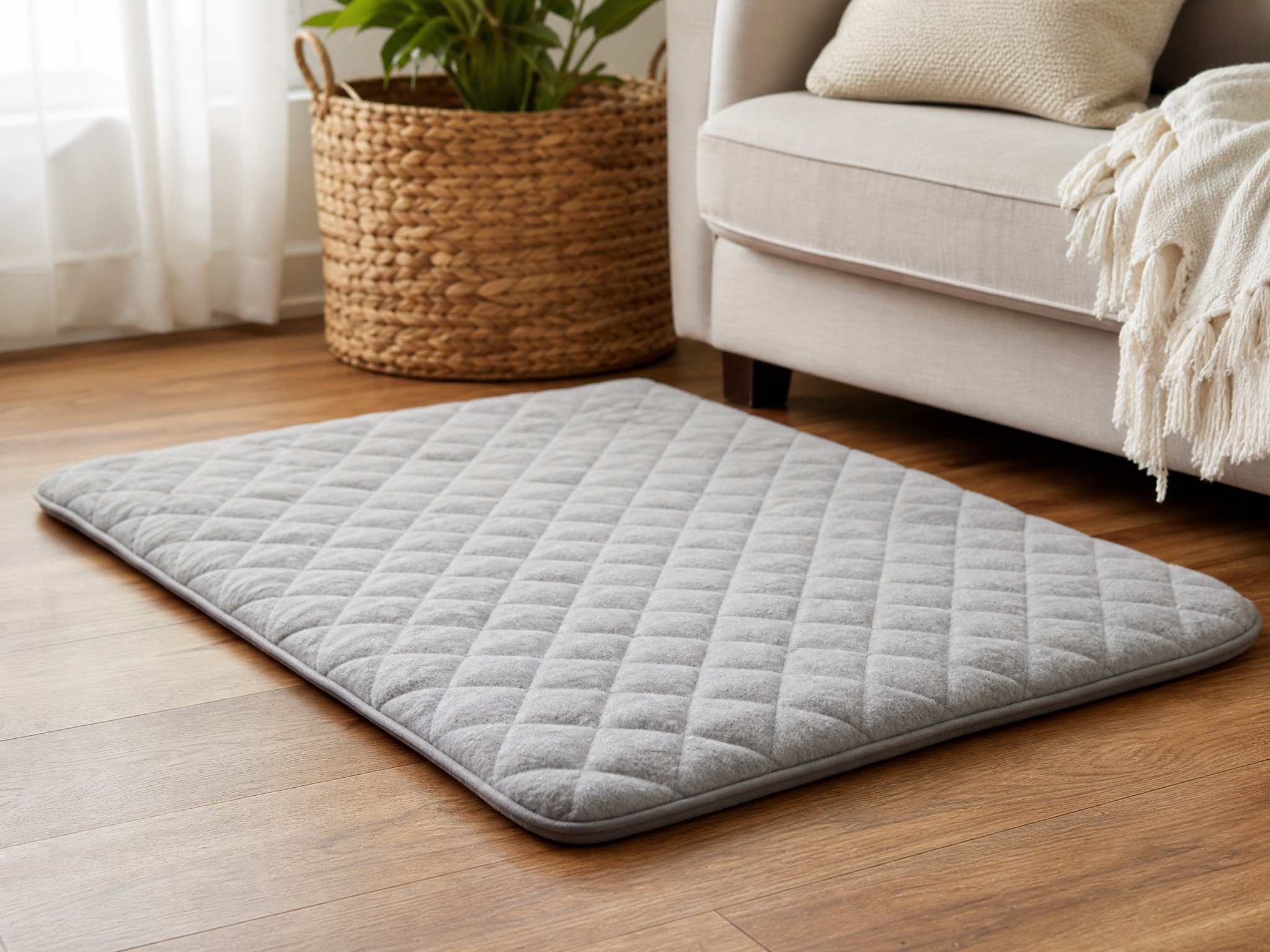
Crate Mat or Pad
Our pick: Slumber Pet Megaruffs Chew Resistant Crate Mat
A low-profile, washable, chew-resistant pad makes the crate comfortable without giving a teething puppy something to shred. It's the practical starting point before you invest in a plusher bed.
2. Size it for the growing dog
A bed that fits your eight-week-old puppy will be far too small in a couple of months. Size up: pick a bed your puppy can stretch out on fully as an adult. For a crate pad, match it to the adult crate size. Buying a bit big from the start usually beats replacing a bed you outgrew in six weeks, with one exception, which is that a too-large bed in the crate can undermine potty training early on. Keep the crate pad snug and save the big plush bed for outside the crate.
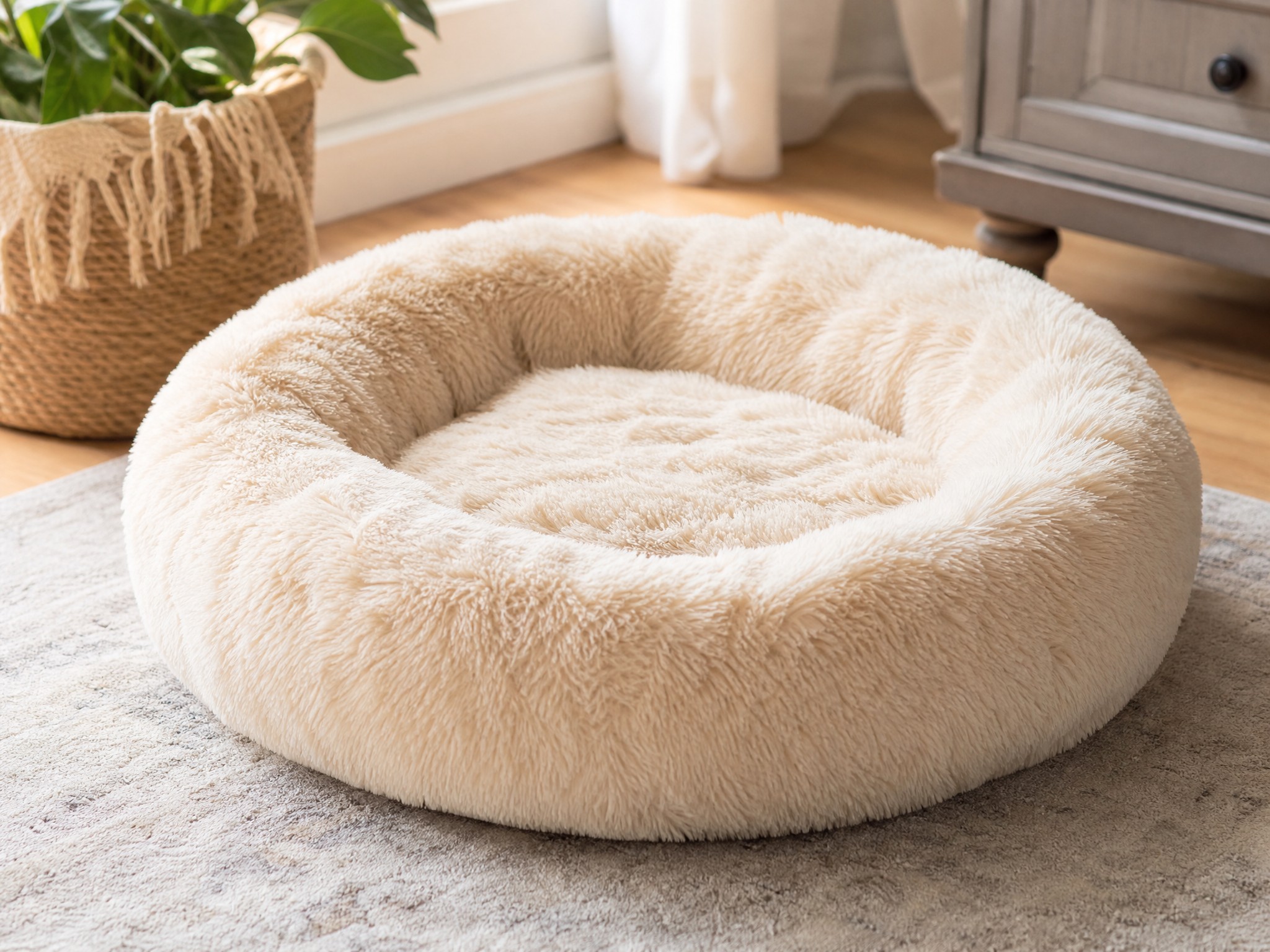
Plush Calming Bed
Our pick: Bedsure Calming Dog Bed (Donut)
Once your puppy is past heavy chewing, a soft bed with raised edges gives them something to nestle against, which many puppies find soothing. Choose one with a removable, washable cover and size it for the adult dog.
As an Amazon Associate I earn from qualifying purchases. Product buttons are affiliate links — buying through them may earn us a small commission at no extra cost to you, and never changes what we recommend. Full disclosure.
3. Match the fill to your sleeper
Watch how your puppy sleeps and pick accordingly:
- Curlers who sleep in a ball love a bolster or calming bed with raised edges to lean into.
- Sprawlers who flop flat do better on a large, flat mattress-style bed with room to stretch.
- Chewers and teethers need a tough, low-profile pad until the chewing settles, then an upgrade.
You don't need an orthopedic bed for a young puppy; those matter more for older dogs with joint issues. Start practical and washable, then upgrade once your puppy is grown and gentler on their gear.
Keeping the bed clean (and lasting)
A bed lives or dies by how easy it is to keep clean. Look for a removable cover with a sturdy zipper and a fill that holds its shape after washing; cheap polyfill flattens into a pancake within weeks. Wash the cover on a gentle cycle every week or two, more often during potty training, and keep a spare cover so the bed isn't out of commission on laundry day. A waterproof inner liner is worth seeking out for a puppy still having accidents, because it protects the fill from soaking through.
Place the bed where your puppy already likes to settle rather than where it looks tidy to you, since a bed in a drafty hallway or a too-busy spot just gets ignored. Two smaller beds, one near the family and one in a quiet corner, often work better than a single bed your puppy never uses. To set up the whole rest area, see how to choose a crate and the best crates roundup.
Questions owners ask
Get the free New-Puppy Checklist
Put the whole first month on one page — supplies, setup, and the routine that keeps training on track.
Get the Free Checklist