Best Slow-Feeder Bowl for Puppies (Slow the Gulping)
The best slow-feeder bowls for puppies that gulp their food, plus a stainless set, a puzzle feeder, and a dispensing toy, and how to slow a fast eater safely.
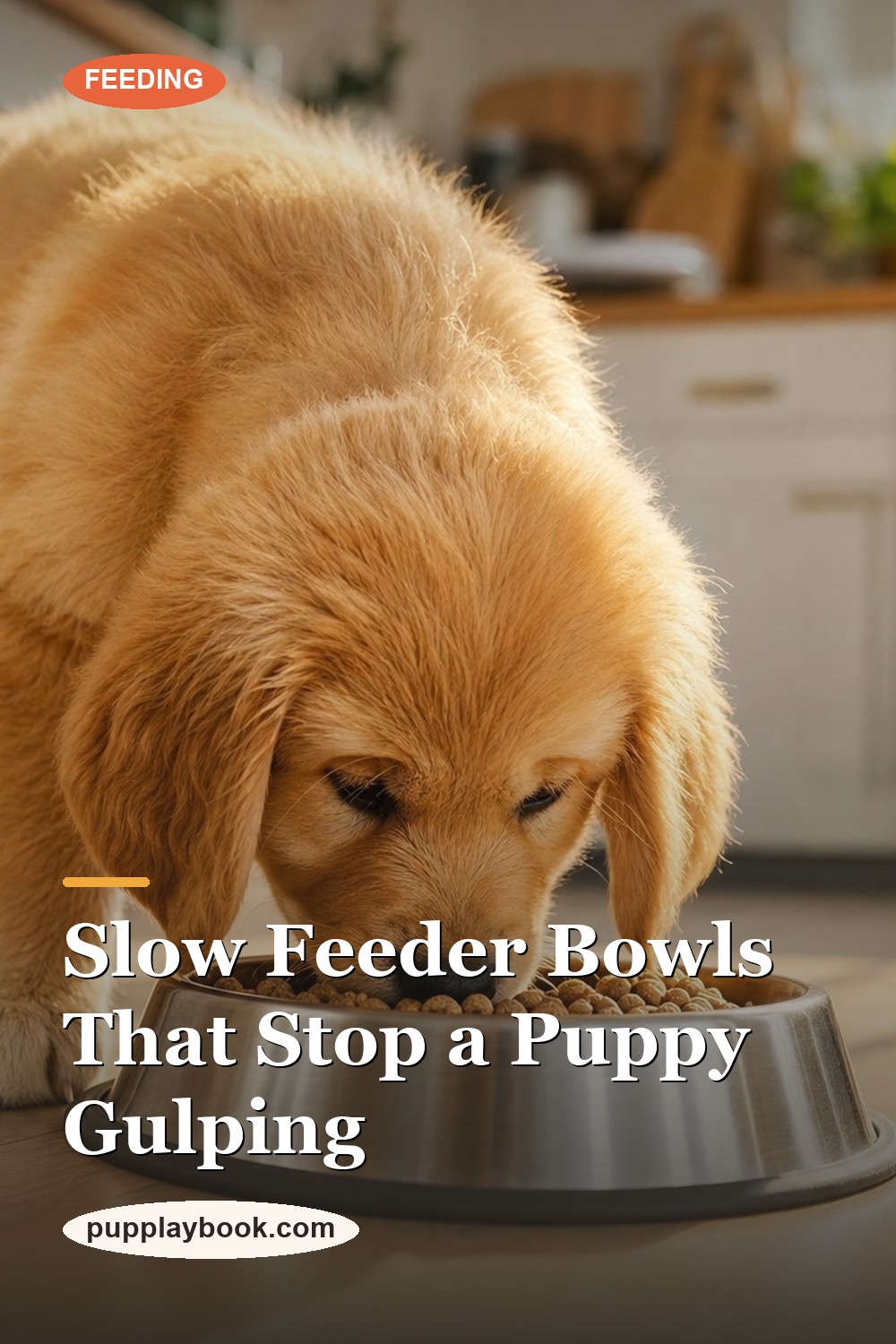
Some puppies inhale a bowl of food in under a minute. Fast eating causes more than a mess: gulping means swallowed air, which leads to burping, hiccups, and the occasional reappearance of dinner on your floor. For deep-chested breeds, eating too fast is also one of the risk factors for bloat, a serious condition. A slow-feeder bowl fixes the cheapest part of that problem by making your puppy work the food out of ridges instead of scooping it in mouthfuls.
Below are the picks we'd use to slow a gulper down, from the slow-feeder bowl itself to a puzzle that turns a meal into a project. Each comes with a plain note on why it earns its spot.
In this guide
| Product | Best for | Price range | |
|---|---|---|---|
| Slow-Feeder Bowl | Pacing a fast eater | $ | Check price → |
| Stainless Bowl Set | Everyday food and water | $ | Check price → |
| Puzzle Feeder | Mealtime as a brain game | $$ | Check price → |
| Treat-Dispensing Toy | Pen time and solo meals | $$ | Check price → |
Our picks to slow the gulping
You can pace a fast eater with one good bowl, or go further and turn meals into mental work. Here's the range, from simplest to most involved.
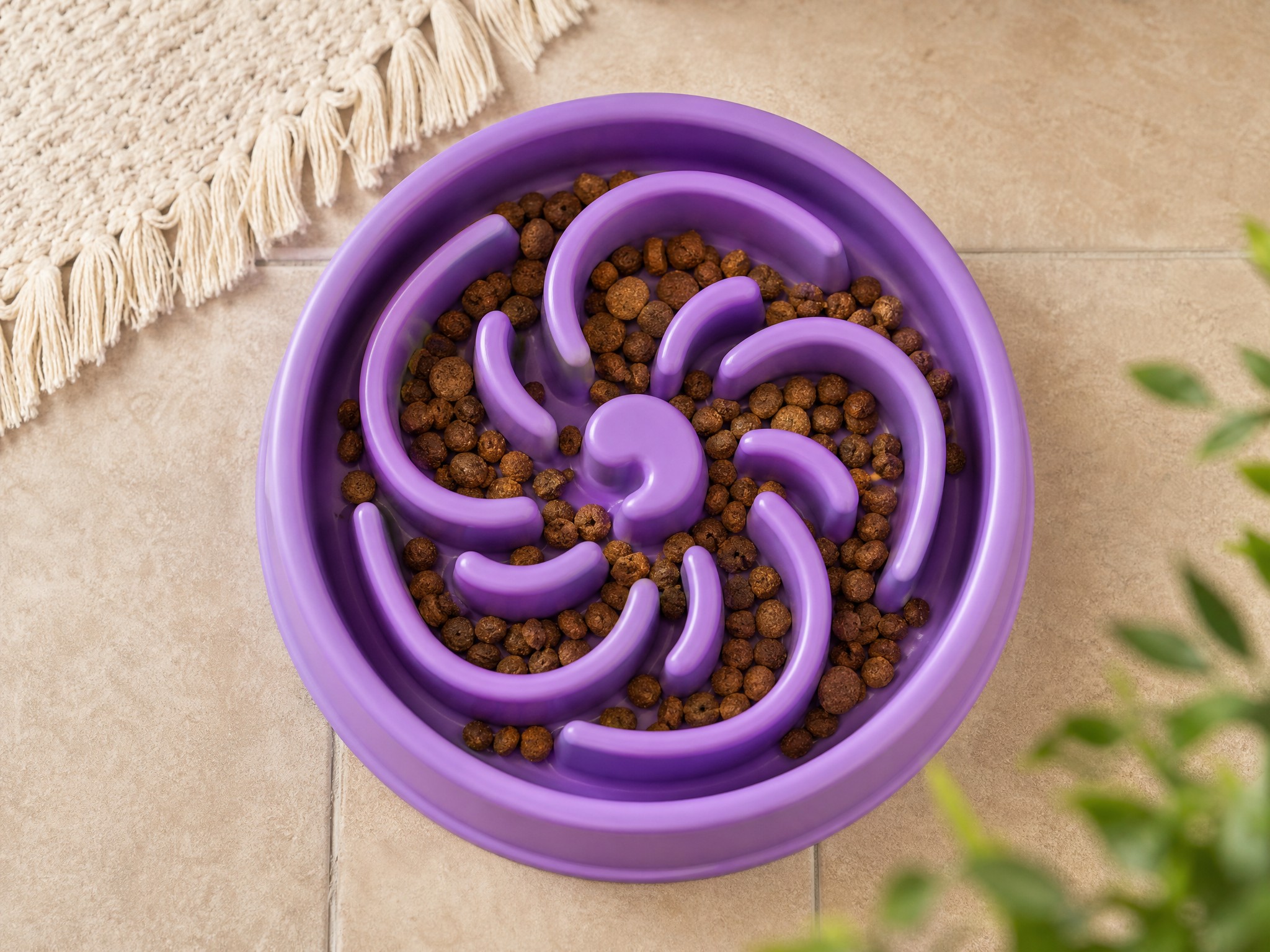
Slow-Feeder Bowl
Our pick: Outward Hound Fun Feeder Slo Bowl (Small)
A bowl molded with ridges and channels spreads the food out so your puppy has to nose and lick it free instead of gulping. A meal that took thirty seconds now takes several minutes, which cuts the swallowed air and the post-dinner mess. Choose a sturdy base or a non-slip ring so the bowl doesn't skate across the floor as your puppy pushes it.
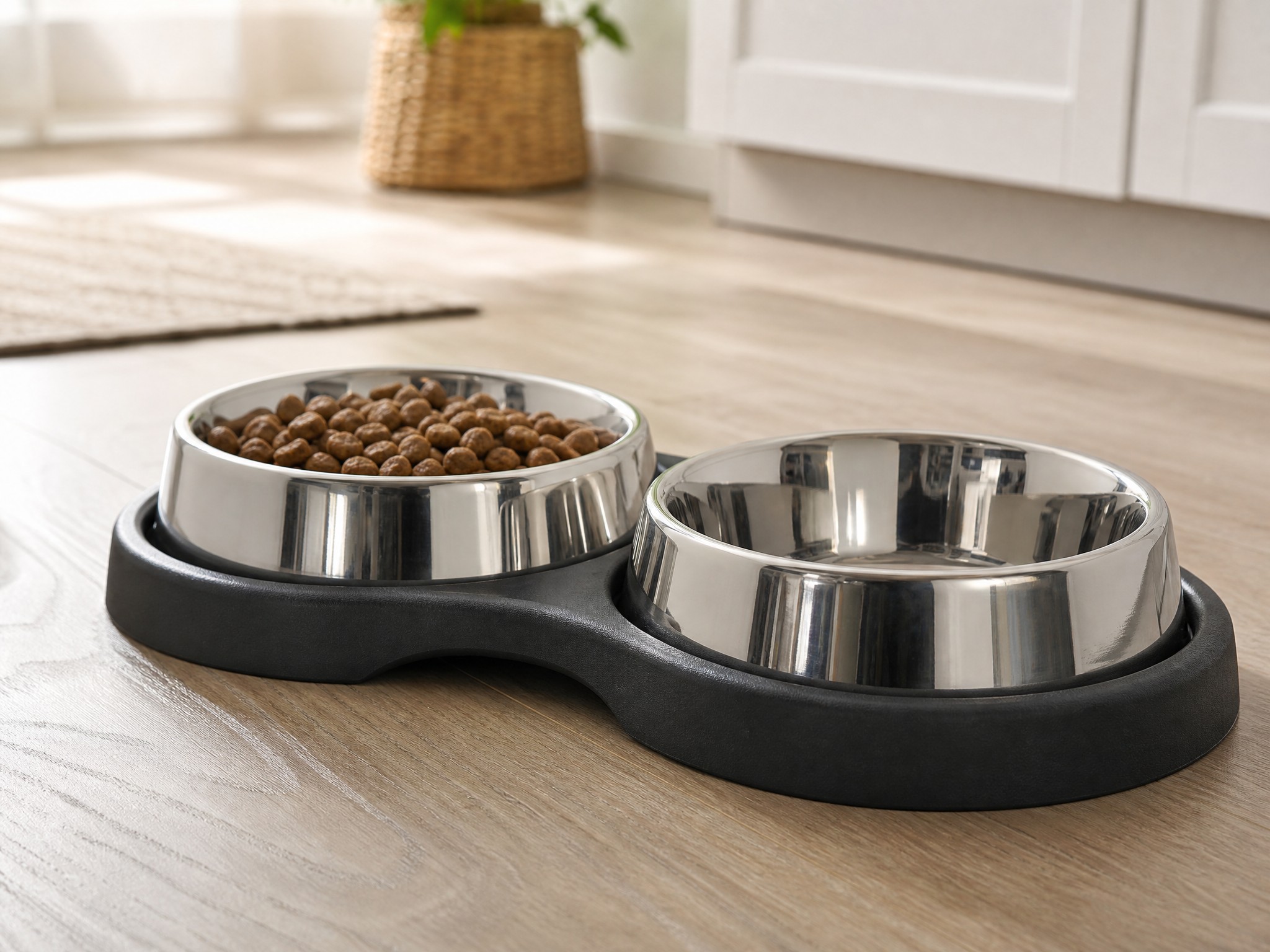
Stainless Steel Bowl Set
Our pick: Amazon Basics Stainless Steel Dog Bowls (2-Pack)
Even with a slow feeder in rotation, you'll want a plain set for water and for calmer meals. Stainless steel doesn't hold odors, won't scratch into a home for bacteria the way plastic can, and goes straight in the dishwasher. A pair with rubber bases stays put and lasts for years.
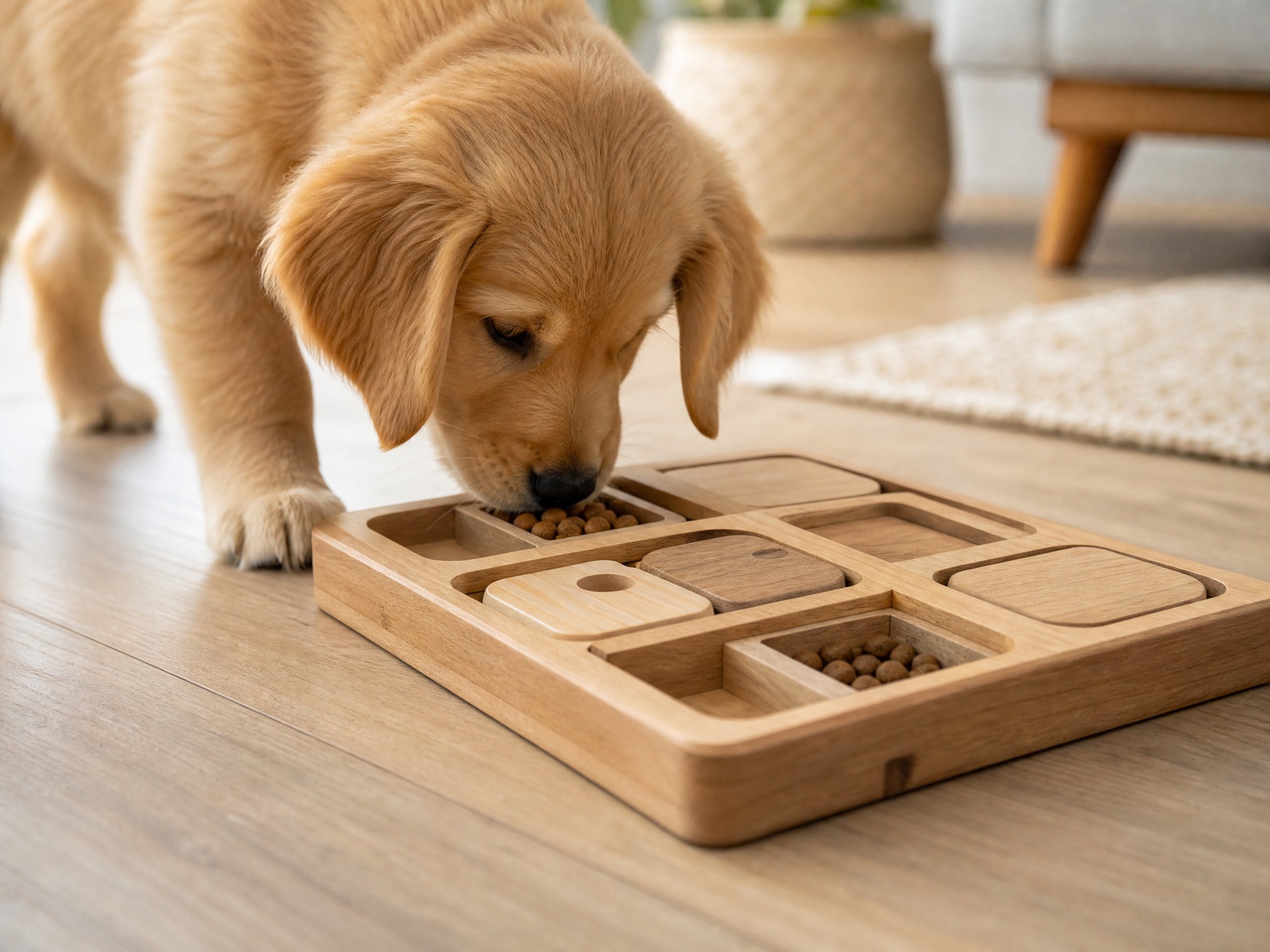
Puzzle Feeder
Our pick: Outward Hound Fun Feeder Slo Bowl
A puzzle feeder hides the food under sliding covers and compartments your puppy has to figure out. It slows eating to a crawl and tires a puppy's brain, which is as draining as a walk on a rainy day. Start with an easy setting so your puppy wins quickly, then make it harder as they catch on.
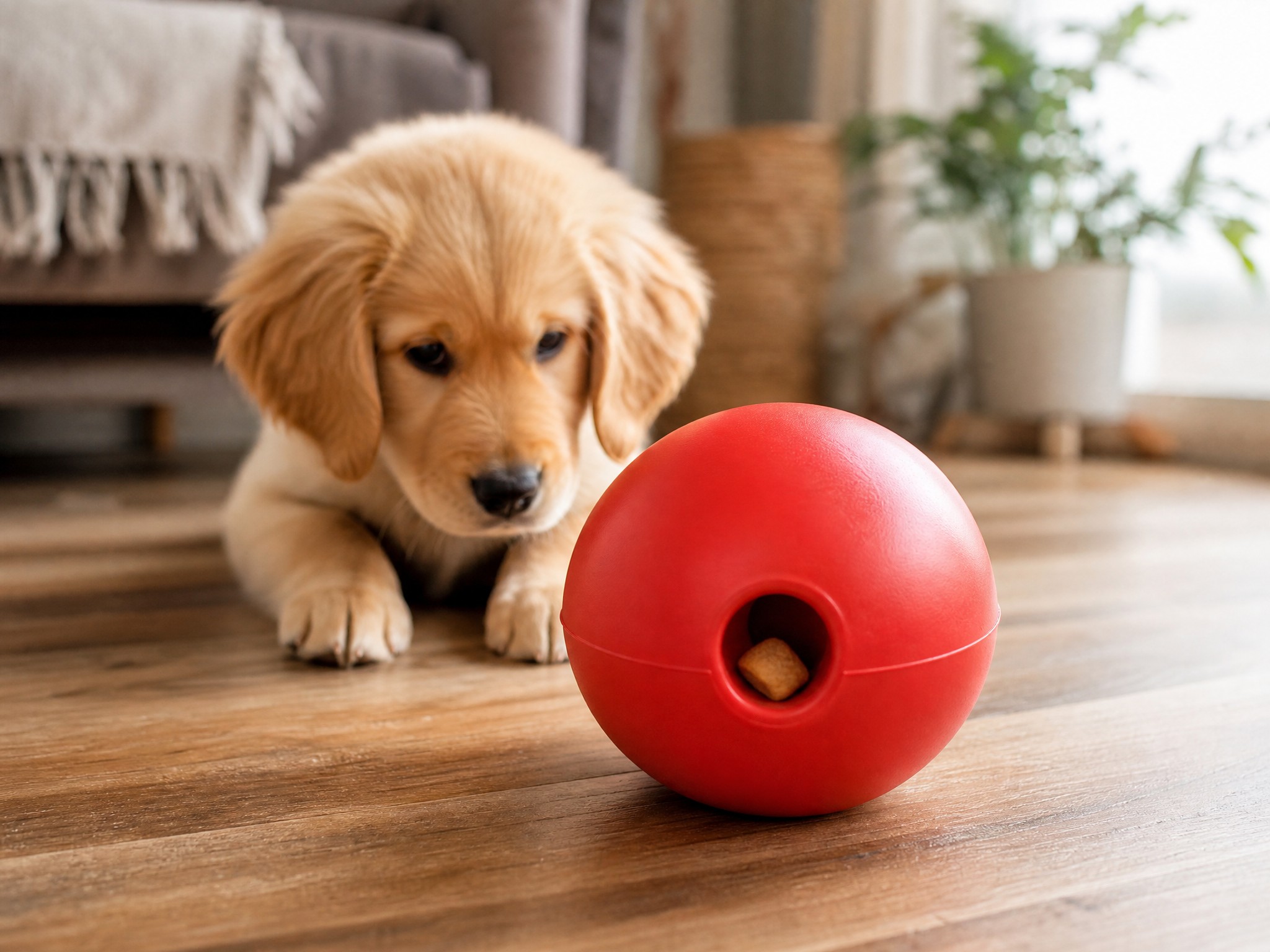
Treat-Dispensing Toy
Our pick: KONG Wobbler Treat Dispensing Toy
A toy that drops a few pieces as it rolls feeds part of a meal while keeping a penned puppy busy. It's a good way to spread feeding across the day and to channel chewing energy into something useful. Fill it with your puppy's regular food so the extra doesn't add calories.
As an Amazon Associate I earn from qualifying purchases. Product buttons are affiliate links — buying through them may earn us a small commission at no extra cost to you, and never changes what we recommend. Full disclosure.
How to slow a fast eater
The bowl does most of the work, but a few habits help:
- Split the day into more meals. Young puppies usually eat three or four times a day. Smaller, more frequent meals are gentler on the stomach than one big bowl and naturally slow the pace.
- Feed in a calm spot. A puppy that's anxious about another pet stealing the food eats faster. Give each dog space, and don't hover.
- Skip hard play around meals. Rough exercise right before or after eating is worth avoiding, especially for large, deep-chested breeds, because of the bloat risk. Let things settle for a while on either side of a meal.
If your puppy still wolfs food no matter what, or shows a swollen belly, retching, or distress after eating, that's a vet call, not a bowl problem. For how much and how often to feed by age and size, see the puppy feeding guide, and to pick the food that goes in the bowl, our best puppy food roundup.
Keeping bowls clean and the right material
A feeding bowl is one of the dirtiest things in the house when it's neglected, so wash it daily. Stainless steel is the easiest to keep clean and the safest bet for most puppies, since it doesn't scratch or absorb odors and handles the dishwasher. Slow-feeder bowls are usually food-grade plastic or silicone, so pick a sturdy one labeled dishwasher-safe and check the ridges for trapped food after each meal. Avoid cheap, thin plastic that scratches easily, because those grooves harbor bacteria and can irritate the chin of a sensitive puppy. If you're weighing kibble against fresh food for those meals, the kibble vs. fresh comparison lays out the trade-offs, and the starter kit covers the rest of the feeding basics.
Shop the full category
Slow-feeder and stainless bowls, puzzle feeders, food, and storage in one place.
Questions owners ask
Get the free New-Puppy Checklist
Put the whole first month on one page — supplies, setup, and the routine that keeps training on track.
Get the Free Checklist